Friday, August 24, 2007

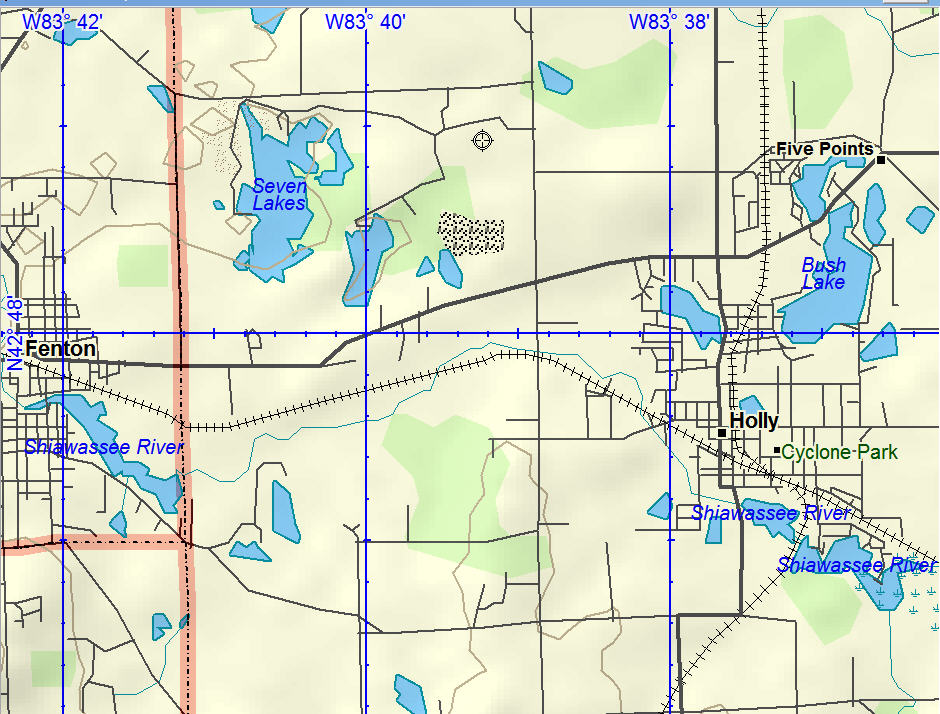
Map of Shiawassee River - Holly, Rose, Fenton- Michigan

New link Shiawassee River Heritage Water Trail http://www.umflint.edu/resources/pdf/outreach/shiawasse-river-trail-map.pdf

CLICK on picture to enlarge

http://www.commerce-dda.com/media/od_study/Holly.pdf

Thursday, August 23, 2007

Cut -Away Kayak Paddling Video

Notice that if you strive for maximum rotation of your shoulders,
your legs will move up and down to help the body rotate further.

****Go here to watch a video demonstration: *****

http://www.epickayaks.com/shared/docs/685/hip%20rotation.wmv

You can add even more power to your stroke by using your legs and hips.

For a stroke on the right, start with your right knee slightly bent and as you pull through the water, extend/straighten this leg.
- This pivots the right hip back in the seat and this hip rotation multiplies the rotation you can get with your shoulders.

Better Kayaking Stroke Technique

Taken from http://www.usawildwater.com/ techniques and training.

Spend short time - realize significant performance gains !

Focused on five primary areas where most developing kayak paddlers need improvement to build efficiency. They are Rotation, a proper Elbow Lift with the top arm, the Catch, pushing with a bent elbow through the Power phase, and the Exit.

Rotation
Rotation is the single most important component to building a powerful and efficient stroke, but is the one that is most underutilized by paddlers. The concept is to use the large muscle groups of the back and abdomen to power the boat forward rather than the small muscle groups such as the biceps and triceps.
People who have heard that rotation is important may feel like they have taken steps to use good rotation, but are still usually only rotating their upper torso rather than twisting from the base of the spine. One way to overcome this is to try to exaggerate your rotation on dry land.


Try to exaggerate rotation, and reach with a relaxed front shoulder and arm. Feel the potential energy getting ready to explode from the abdomen. Note how the back arm is already in line with the wrist and shoulder (the chicken wing described below).

Try to imagine a steel rod that runs through the top of your head to the base of the spine. Sitting on dry land in an upright position, try rotating back and forth along the length of your spine with your paddle resting on your shoulders. You should feel that same pull at the base of your spine when you are paddling. This is the only way you will employ the larger muscle groups during the stroke. You must be able to power the boat from the rotation of the hips as well as the back! It will also give you an idea of some of the muscle groups that are important to address when stretching before and after a workout.
When you are learning to rotate, watch out for an exaggerated side-to-side rocking motion in your boat, which actually slows you down by making the boat bob up and down. If this is happening, you need to "quiet" your lower body.

The Elbow lift (chicken wing)
With your top arm, raise the elbow and wrist up as one horizontal unit, rather than leading with the wrist and letting the elbow following at a lower plane.
Imagine a chicken raising a wing as a single unit.
The key to the "chicken wing" is to align the joints of the shoulder, elbow and wrist so that they are ergonomically sound, as well as to lock in and transmit the rotational power from the torso to the paddle blade.
-Imagine throwing a punch. To knock down the other guy, you would line up your elbow with your fist and shoulder to get the best horizontal power, whereas throwing a punch with the elbow lower than the wrist and shoulder would be little more effective than a slap to your opponent. You wouldn't do that...you'd lose the fight! So don't do it when you paddle. Many paddlers who suffer from wrist tendonitis may be able to fix their problem by making sure their joints are aligned horizontally.

The Catch
This is the place where people lose the most efficiency. The kayak stroke is usually only about three feet long, and the key problem to overcome is to not allow your body to unrotate until the blade is completely buried in the water.
-If you start to unwind AS you plant the blade, rather than before the blade is fully buried beneath the surface, you will unnecessarily lose several inches in the stroke length and lose a lot of power stored up in your rotation. These inches can add up to as much as an 18% loss in efficiency over the course of a race.

Spearing the salmon: Transfer the consciousness of power from the bottom hand to the top, and slide the paddle in beside your toes. Pulling too early with the lower hand can mean critical inches lost in the stroke's length.
-Timing during the catch is also very important. If you can pause just a millisecond and allow the paddle to be fully submerged before you pull on it with your lower hand, you will have much more power at the front one-third of the length of your stroke. The pause should be very short, yet fluid with the rest of your stroke.

The best way to ensure the blade gets in the water as far forward as possible is to reallocate the energy from the lower hand to the top hand. If your top hand is sliding the blade in beside your toes, as if thrusting the blade in a spearing motion, the lower hand will not hurry the catch. Intuitively, one wants to start the blade in with the lower hand, which is something to overcome. Changing your attention to the top hand will also help you relax you lower hand, arm and shoulder, which can actually help extend your reach by a few more inches.

Pushing with a Bent Elbow
There are two rules that a lot of kayakers learn that are incorrect. They are that "you should punch forward down the center of the boat", straightening your arm, and that "your top hand should never cross over the center of the boat". These rules were fine in the days of arm paddling. But to be fast , you have to unlearn these two rules. So write them both down on a piece of paper, crumple the paper up, and toss them away forever.

Just prior to the exit, your top arm should be bent ninety degrees, and you should be looking right across your forearm.

-Pushing with a bent elbow is the part of the stroke that helps you take advantage of your rotation during the power phase. You want to push with your top hand as though you are throwing a crossing blow, elbow bent ninety degrees, with the stroke ending up with you looking just over the top of your forearm.
When you incorrectly push straight ahead instead of pushing across, then the path of movement for the blade is an arcing movement that pushes up and down on the surface of the water, rather than down the long of axis of the boat. If you push straight ahead with your top hand, all you are doing is lifting water with the blade and pulling the boat down deeper--a huge impediment to efficiency.

Imagine what the perfect paddling machine would look like: it would take the paddle, place it vertically in the water at the front of the boat, and pull it back along the long axis of the boat vertically the entire time the blade is in the water. Since we are human and limited by having to hold the shaft with two hands, pushing across the center line of the boat is the closest we can come to an ideal vertical blade position. Once again, It is okay to cross the center line with your top hand, and is key to transferring your rotational power to the blade.

The Exit
Most paddlers hold onto the exit too long and very few take it out too soon. The blade should come out of the water when your hand meets your hip. So imagine that you have a steel rod across your hips that extends on either side of the boat. Once your hand hits the rod (not the blade), then get the blade out of the water.
The blade should come out effortlessly because this is the only split second of rest that the kayak stroke actually allows; don't make yourself work here!

Imagine your hand hitting a steel rod jutting out sideways from your hip. Get the blade out quickly when your hand hits the rod.

Let the blade come out where it "wants" to come out. Forcing the blade further than its natural exit zone wastes energy. If you are making the blade come back further in order to help set up rotation for the rotation and set-up for the next stroke, remember that you can more easily rotate with the blade out of the water than in it.

Putting these components together takes some effort, and the mind works best when you slow the stroke down and think "rotation, catch, chicken wing, exit" as a tantric chant. Try concentrating on getting the technique down on one side, then the other, and then together in a fluid motion. In a very short time, you should see improvement in how much further you can go with far less energy output.

Monday, August 20, 2007

Paddle Stroke Manual

Quiet Boat: Your boat should be steady and not move around (bobble). Whether your goal is to paddle straight ahead or create beautiful turns, smooth transitions while blending strokes, heel control and a solid boat is key to efficient paddling.

Quiet Paddle: Your paddle should not create a lot of noise or splash. If it does, work on feeling how the paddle moves in the water and practice quietly. For most strokes, avoid pushing down on or lifting water. Make your paddle "stick" during the catch phase.

C P R : All strokes have at least three parts: Catch, Power, Recovery. Some strokes have added parts : exit, transition, control, correction. But they all have a beginning middle and end... C.P.R.

Move to the Paddle: The boat moves up to the paddle during a stroke. The paddle stays at the catch position.

** You are not pulling the paddle to you. **

Power Stops at the Knee or Hip: During the forward stroke all power stops at the hip.

Dynamic vs. Static: Dynamic strokes are when the boat is pulled toward or pushed away from the paddle, while during static strokes the paddle is planted and held firmly in place while the boat moves.

Posture & Pelvis: By sitting up straight and balancing equally on your sitz bones, you create a strong pelvic base that will liberate your upper-body motion. Once your arms and legs are connected to a reliable center, tension decreases and flexibility improves.

Nose and Navel Over The Centerline: Keep your nose and navel over the centerline of the kayak and you will stay upright. This position is important for good posture, balance, presentation and effective heeling. The eyes also help maintain balance…so maintain a well-aligned head and look up.

Torso Rotation: Arms are connectors to the real source of power. Incorporate torso rotation into your strokes. The large torso muscles are an efficient source of power. Wind them up and use them.

Stay in the Paddler’s Box: Keep arms and hands in front of the shoulder plane to create a "paddler’s box." By using torso rotation to maintain this position during strokes, power is maximized and shoulder safety is maintained.

Breathing: Don’t hold your breath – let it go. Awareness of your breathing will help minimize tension, enhance the flow of your strokes and improve balance.

Intention: Intention is the beginning of every movement. If you focus on a movement a split second before you initiate movement, the ensuing movement will be clearer. Visualize it, and then do it. Look where you want to go.

Less is Usually More: Go for quality not quantity. Practice maneuvers, strokes, heeling and transitions slowly and precisely and then build up speed

Sunday, August 19, 2007

J Stroke Paddle Canoe Technique


Watch the placement of the paddle and the body movements carefully.
Notice I said body and not arm ? There is a reason why.

The Basics of the Forward Stroke

The first thing to know about efficient canoe paddling is that the most powerful muscles in the upper body are in the back and shoulders.

The muscles of the arm such as the biceps and triceps are best used in a supporting role, not as the major movers.

The arm muscles will tire long before the big muscles of the back.

Thursday, August 02, 2007

Capistrano flip canoe rescue

Check out July 2007 "Canoe and Kayak" Magazine--
Canoe Self-rescue with the Capistrano Flip--Written by Conor Mihell

It will describe in detail what to do when
a canoe is flipped on a large body of water.
Step 1 - get under the boat in the air pocket
Step 2 - synchronize with partner ( face each other)
Step 3 - swim kick hard, use arms to lift boat
Step 4 - flip boat keeping edges out of water
Step 5 - partner holds boat steady for re-entry

**see video clip below for a demonstration**


-


-

http://www.canoekayak.com/canoe/capistranoflipcanoe/

Have fun this summer - -

Wednesday, August 01, 2007

Video - Technique to Right a Flipped Canoe and Re-Enter


Additional Canoe Flip videos
http://video.google.com
Title:--2007 SMAC Adventure Race--

River Clean Up on August 11

Shiawassee River Cleanup on August 11th, 2007 in Holly, Michigan

The Shiawassee River needs your help!
The river is shallow in August and it is the best time to work.

On Saturday, August 11th, volunteers will meet at Waterworks Park,
opposite the Mill Pond on Broad Street in Holly, MI at 9:00 am.

Teams of people will depart from there to half a dozen river
access points to remove trash and clear the river .
Learn how to create new fish habitat and properly clean a river.

This work is supported by a mini-grant
from the Michigan Department of Environmental Quality ( MDEQ )

Please call 248-634-3513 to get an assignment and
learn what tools to bring and clothing to wear.

A light lunch will wrap-up the morning's clean-up.

Thanks for volunteering! The Headwaters Trails Team

Friday, June 15, 2007

Lower Shiawassee River paddle

Taken from June 2007 edition of Eddy Lines
A PUBLICATION OF SOUTHEAST MICHIGANS CANOE & KAYAK CLUB

Lower Shiawassee River paddle
The day started out cool and comfortable as we loaded two
small recreational kayaks onto the truck for the trip out to
Holly and the annual Shiawassee River Holly to Fenton pleasure
paddle. Since this part of the river is very twisty with
many quick turns and obstacles to navigate, Sharon and I decided
to use short recreational kayaks instead of a canoe.
However, if all goes well, next year we may enter the race
that is run earlier in the day. Once we arrived in Holly and
got out of the truck to register we were amazed at how cold it
had become. While we were driving we naturally didn’t notice
the temperature change but we certainly did as soon as
we got out into the weather. Fortunately we had brought
along extra gear. The short pants and T shirt were quickly
replaced with fleece pants, warm shirt, fleece vest and jacket.
I would have liked to have had my Chota boots used for winter
paddling but did not even think about bringing them in the
morning.
At the registration table we met Nikki who was volunteering
for the event. Since she is recently from California the cold
snap had her wishing for the warmth of California , but she
kept on with her duties with no complaints. During registration
we also noticed Laurie in the staging area getting ready
to launch. After registering and receiving our free beer cup
bailers we unloaded and made our way down to the launch
area and got under way. As is usually the case, once under
way with PFD on and the physical exertion of paddling we
were soon heated up enough to start removing layers. The
river is a fun paddle. There are many technical spots that test
your paddling skills. The river is small and typically shallow
in most parts of this seven mile run, but offers many different
types of water from fast and narrow to the ponds that the beavers
helped construct. Headwater’s Trail did a great job of
marking the river so that you knew exactly where you were
and having spotters staged at all the difficult to navigate areas
such as the low bridges and to help line up boats for going
through the tubes at the railroad bridge. If you haven’t tried
this event before, bring a friend & get in on the fun next year!

Tom Brandau

Upper Shiawassee (N. Davisburg paddle)

Taken from June 2007 Eddy Lines
A PUBLICATION OF SOUTHEAST MICHIGANS CANOE & KAYAK CLUB

Upper Shiawassee north of Davisburg paddle
On a pleasant Saturday morning Sharon and I met Mike Vlaikov to paddle the Upper Shiawassee north of Davisburg from Rattalee Lake Road through Rattalee Lake to the railroad bridge which crosses the river. Only a small culvert flows under the river where the railroad bridge crosses, much too small for any boat to get through, and we decided not to Portage over the railroad tracks. However, the paddle up to this point was just enough for the time we had for paddling that day.
The river had many tight turns at the start and was good practice for Mike in his kayak. In our canoe with steering in both the bow and stern Sharon and I managed to navigate fairly well. It was good practice for all of us.
This is very much a wetlands area and very grassy.
The river winds through the area with a couple of islands and small lakes scattered about. One island in particular not too far from the end of our paddle near the railroad tracks worked well as a landmark. Since it was higher than the surrounding area with some trees growing it stood out well from the grasslands. When paddling
the lakes seemed to suddenly appear from the grasslands and wisting river. We would then paddle to the far end seeking the continuing river that we knew would be there somewhere. Numerous muskrat dens were seen and a couple of muskrat, but no beaver. The water was surprisingly deep in the stream sections considering how narrow it was, and some small fish, probably trout, were seen. The fish were more in the beginning of the river near Rattalee Lake Road .
On our return paddle the trip seemed to go quickly.
We had the wind at our backs and even though we were paddling upstream the trip ended much too quickly. At the takeout there was a very green frog who seemed to like his picture taken and was just
hanging around right where Mike needed to come in to get out of his boat. With a bit of prompting the frog finally moved out of the way so that Mike could come in and pack up his boat and gear for the trip home.

Tom Brandau

Thursday, June 07, 2007

Flint Journal - Shiawassee River Article

THE FLINT JOURNAL FIRST EDITION
Thursday, June 07, 2007
By Elizabeth Shaw

HOLLY TWP. - Well, it's official: I would never, ever have won the Holly to Fenton Canoe Race.

Two weeks after the third annual event on the Shiawassee River Water Heritage Trail, a group of us decided to explore the route.

It took the four of us three hours to paddle our kayaks along the seven miles from WaterWorks Park in Holly to Strom Park in Fenton - a far cry from the hour-and-a-half pace set by competitors during the May 20 race.

That's OK by me. My advice is to take even longer if you can. The view is worth the leisurely float.

The well-maintained waterway is a pleasure to paddle, fairly easy for beginners with its shallow, slow-moving water that's mostly clear of deadfall and other obstacles.

But there also are enough twists and turns to keep more experienced paddlers occupied, winding through an ever-changing panorama of backyard gardens, open marshlands and lushly shaded woods.

This year the upstream end has seen huge improvements, thanks to the Community Foundation of Greater Flint and REI Inc. of Troy.

Paddlers now start the route at WaterWorks Park by carrying their boats from the gravel parking lot across the new wooden Charles Harding Mott II Footbridge and down a groomed path to the easy canoe launch site.

I've been on stretches of the Shiawassee and Flint rivers where private landowners have refused to let volunteers clear fallen trees back to the shore, apparently in an effort to discourage paddling traffic.

Not so here, where friendly riverside residents seem to welcome the chance to smile and wave.

"Stay to the left going through the tunnel. The other side is all rocks," a homeowner warned as we drifted past his fence toward the metal culverts under Legrand Street, the first road crossing as the river heads north and west.

Further on through the village, another couple waved down at us from their backyard deck.

"The current picks up a little toward Fenton. It's not bad, but you wouldn't want to try paddling back upstream," the woman called out.

We were lucky enough to reach the railroad bridge just in time to meet a freight train roaring overhead.

"Hurry up! We're going to miss it!" my son Nate shouted, paddling furiously to reach the culverts. Just as he reached the bridge, the current caught and held his kayak as he tried to point it through the middle culvert. He was still turning his bow into the tunnel when my own kayak swept in and struck him broadside. Our laughter echoed off the sides of the metal tube as we glided through beneath the thundering train.

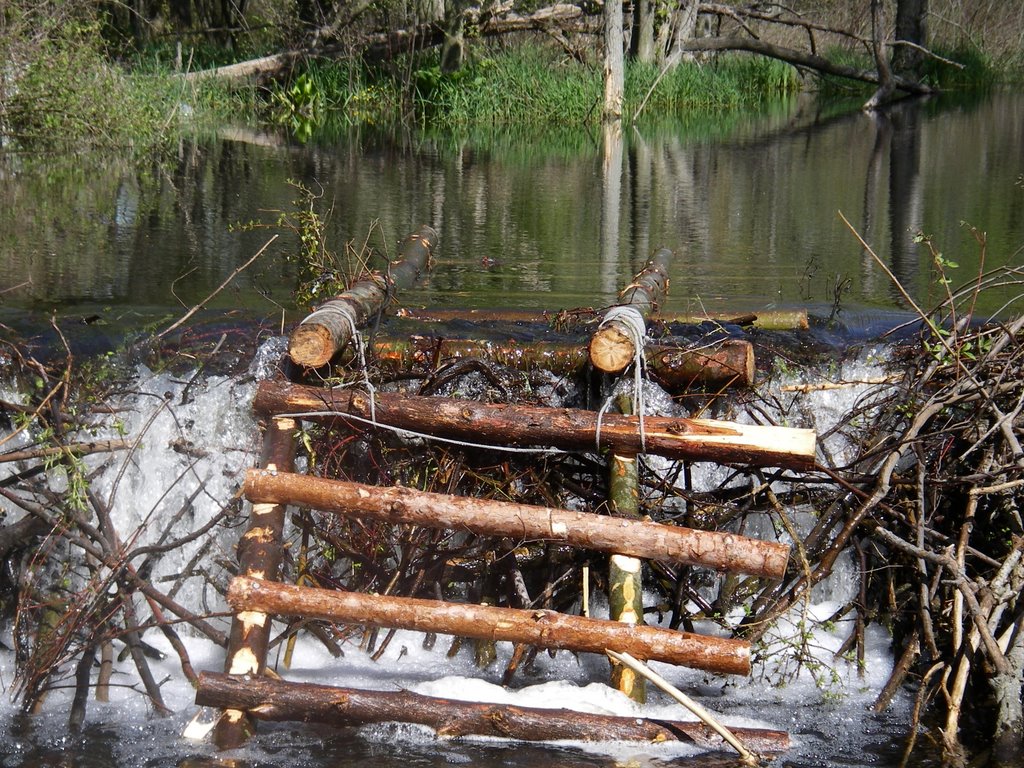
Some of the best things weren't on the map at all, such as a beaver dam completely blocking the river near the halfway point. Not exactly white water, but a fun challenge nonetheless. One at a time, we pushed out and over the top of it like a slide made of sticks, our kayaks neatly dropping down to the water about two feet below. (Not to worry: There's also a portage ladder for those who'd rather get out and haul their boats across.)

In a wide flooded marsh, a pair of swans stood guard over their cygnets as we slowly glided past.

It wasn't even hard to keep our weary shoulders working through the wide, weed-choked millpond at the end. All it took was the thought of iced tea and sandwiches awaiting us at the French Laundry just a few short blocks walk away.

Maybe somewhere else it's easy to take days like this for granted. But around here, it's only through the vision and hard work of individual volunteers that our waterways are slowly opening up into the recreational assets they deserve to be.

In this case, the ones to thank are the volunteers and donors of Headwaters Trails, Inc., a nonprofit group dedicated to the construction of a complete land and water trail network in northwest Oakland County's headwaters region.

The group recently received $25,000 from the Saginaw Bay Watershed Initiative Network to create interpretive signage, pointing out natural and cultural history as well as mileage and directions.

Right now, they're trying to raise $20,000 to buy a one-acre parcel on Fish Lake Road to build a mid-point canoe landing.

The much-needed landing will help keep paddlers off private land - right now there's nowhere to legally stop for a rest break - and offer a shorter option for those who don't have the time or energy for the entire seven-mile stretch.

The Riverducks also are always seeking volunteers to help keep the route clear of obstructions

Headwaters Trails Inc. meets at 7 p.m. on the first Wednesday of each month in the Holly village chambers, 315 S. Broad Street, Holly.

The Riverducks volunteer to help clear obstructions from the river several times during each season.

Donations are now being accepted for a new canoe landing at Fish Lake Road.

To volunteer, join or donate, visit www.headwaterstrailsinc.org or call (248) 634-3513.

Want to paddle?

Join the Fenton Area Paddlers for a Sunday float at 2 p.m. at the west end of Holly Mill Pond at Holly WaterWorks Park, on Broad Street north of Rose Street. Details: jmclark473@comcast.net.

Water wonders

First-place winners of the third annual Holly to Fenton Canoe Race were:

Expert Class: 1:20, Martin Spees of Flint and Jimmy Spaulding of Grand Blanc

Novice/Youth Class: 1:21, Tim and Kurt Marth of Holly

Kayak/Single-person canoe: 1:15:31, Ken Foss of Holly

Pleasure paddle: 1:51, Bruce Lowe, Ben Lowe and Ben Curtis of Holly

Friday, May 25, 2007

Mileage Marker Map


Mileage Markers along River
(click for full size view)

Sunday, April 29, 2007

Take-Out in Fenton = Strom Park

Strom Park at 299 South East Street, near the East Street Bridge.

Heavners Canoe will have a van and trailer to shuttle boats back
to the starting point at WaterWorks Park on Broad Street in Holly.

A dam is located on the other side of the bridge.
DO NOT paddle over the dam, the police station is only 100 ft away !

Friday, April 27, 2007

New Bridge & Canoe Launch

Image hosted by Webshots.com
by willi_h2o

Click on picture to see all the photos

Monday, April 09, 2007

Registration for 2007 Race / Leisure Paddle

Advance registration is preferred for the May 20, 2007 Paddle

Entry Forms are available at :

http://www.headwaterstrailsinc.org/RiverRaceregistrationform2007.PDF

Onsite Registration begins at 10:00 am on May 20, 2007
Waterworks Park in Holly, Michigan

Thursday, March 29, 2007

May 20 - Leisure Paddle and Race

Holly to Fenton Canoe/Kayak Event

a.) Leisure paddlers and families welcome

b.) Canoes available for rental thru Heavners Canoe Rental
who will be onsite that day with plenty of canoes for all that want to paddle

Maps

http://www.headwaterstrailsinc.org/images/ShiawasseeRiverMap.jpg

http://www.headwaterstrailsinc.org/images/SE_Michigan_Inset_Map.jpg

Friday, January 19, 2007

Paddle Event - May 20, 2007

This years 7 mile race and leisure paddle
on the Shiawassee River will take place
on Sunday May 20, 2007 .

Starting Point - WaterWorks Park in Holly
TakeOut Point - Strom Park in Fenton, MI

New for 2007 :
A bridge and canoe/kayak launch

For detailed maps, pics and video

scroll down or check the archives.

Friday, January 05, 2007

Paddle on Shiawassee -- Jan 4, 2007

On Thursday morning Doug Lanyk and I decided to paddle the 7 miles from Holly to Fenton along the Shiawassee River. The weather was a mix of clouds and sun with a little wind mixed in.
Upon arrival at the put in next to WaterWorks Park in Holly we ran into 2 other kayakers ready to go. They had already staged their shuttle vehicle at Strom Park in Fenton.
The bridge construction is underway and hopefully will be completed in time for the 2007 race. The bridge will be a huge help allowing people to easily launch canoes and kayaks from a little peninsula in the river.
The Shiawassee has a large amount of marsh and wetlands that act as a sponge, moderating fluctuations in water levels. The beaver dams add another interesting component as the river finds new ways of winding between the trees.
The full 7 miles of river is open and easily navigated with the exception of a few spots where a tree or two had fallen. We didn't have to portage at all on Thursday. A wonderfull day on the river.
A late lunch at the French Laundry in Fenton was washed down with a few beers from their amazing selection of brews.
Headwaters Trails is ramping up to promote and host Roz Savage in her one and ONLY stop in Michigan for a speaking engagement Saturday March 24, 2007 .

http://www.headwaterstrailsinc.org/Rozflyer.PDF

http://rozsavage.com

Beaver Dam -- Jan 4, 2007


Please click on image for larger picture

Doug at beaverdam -- Jan 4, 2007


Please click on image for larger picture

Swollen riverbanks -- Jan 4, 2007


Please click on image for larger picture

Beautiful Marsh -- Jan 4, 2007


Please click on image for larger picture

Low Bridge -- Jan 4, 2007


Please click on image for larger picture

Wildlife -- Jan 4, 2007


Please click on image for larger picture

Bridge Waterworks Park --Jan 4, 2007


Please click on image for larger picture

Expected to be completed in time for the 2007 race !!

2 Kayakers at Put-In -- Jan 4, 2007


Please click on image for larger picture

Wednesday, October 04, 2006

Shiawassee River Put-In and Take-Out

Launch site at Waterworks Park in Holly and Take Out at Strom Park 7 miles downstream in Fenton


Please click on map for larger image and more detail

Overview Map

Please click on map for larger image and more detail

Thursday, May 18, 2006

Shiawassee River Race May 21

All the plans are in place.
Registration starts at 10am.
Let's go paddle and have some fun.

Saturday, May 13, 2006

Event - Rain or Shine

This event will happen rain or shine
on May 21 on the Shiawassee River

Tuesday, May 09, 2006

Building Canoe Ladder over Beaver Dam

Doug Lanyk helping out with massive canoe and tools
to help construct the canoe ladder over the beaver dam.

Canoe Ladder over Beaver Dam 5/8/06

Sunday, May 07, 2006

Video # 10 Shiawassee River 4/30/06

Video #10 Shiawassee River 4/30/06

Video # 9 Shiawassee River 4/30/06

Video # 9 Shiawassee River 4/30/06

Video # 8 Shiawassee River 4/30/06

Video #8 Shiawassee River 4/30/06


Video # 7 Shiawassee River 4/30/06

Video # 7 Shiawassee River 4/30/06

Video # 6 Shiawassee River 4/30/06

Video #6 Shiawassee River 4/30/06

Video # 5 Shiawassee River 4/30/2006

Video # 5 Shiawassee River 4/30/06


Video # 4 Shiawassee River 4/30/06

Video #4 Shiawassee River 4/30/06

Video # 3 Shiawassee River 4/30/06

Video #3 Shiawassee River 4/30/06


Saturday, May 06, 2006

Video #2 Shiawassee River 4/30/06

Video link #2 Shiawassee River 4/30/06

Video # 1 Shiawassee River 4/30/2006

Video link - Solo Paddle April 30, 2006

Thursday, May 04, 2006

River free from obstructions

I paddled the 7 miles from Holly to Fenton on Sunday April 30 and never had to portage once. Doug Lanyk and others from HeadWatersTrails did an awesome job chainsawing fallen trees and removing obstructions in the river. During the trip I took about 70 pics and 10 short videos using my waterproof digital Pentax Optio Wpi. The pics and video will enable the DNR to see how the work was done i.e. preserving fish habitat, preserving vegetation, preserving beaver dams, etc. As soon as I figure out how to post very large video files, I'll provide a link for viewing.

Friday, April 21, 2006

Thursday, April 20, 2006

Shiawassee River Paddle Event

MAY 21, 2006


Holly to Fenton Canoe/Kayak Event

a.) Leisure paddlers and families welcome

b.) Canoes available for rental thru Heavners Canoe Rental onsite that day.

Maps
http://www.headwaterstrailsinc.org/images/ShiawasseeRiverMap.jpg

http://www.headwaterstrailsinc.org/images/SE_Michigan_Inset_Map.jpg

Registration on site will begin at 10am
but advance registration at a reduced entry fee is preferred.

Hosted by Head Waters Trails Inc.
http://www.headwaterstrailsinc.org/whats_new.htm